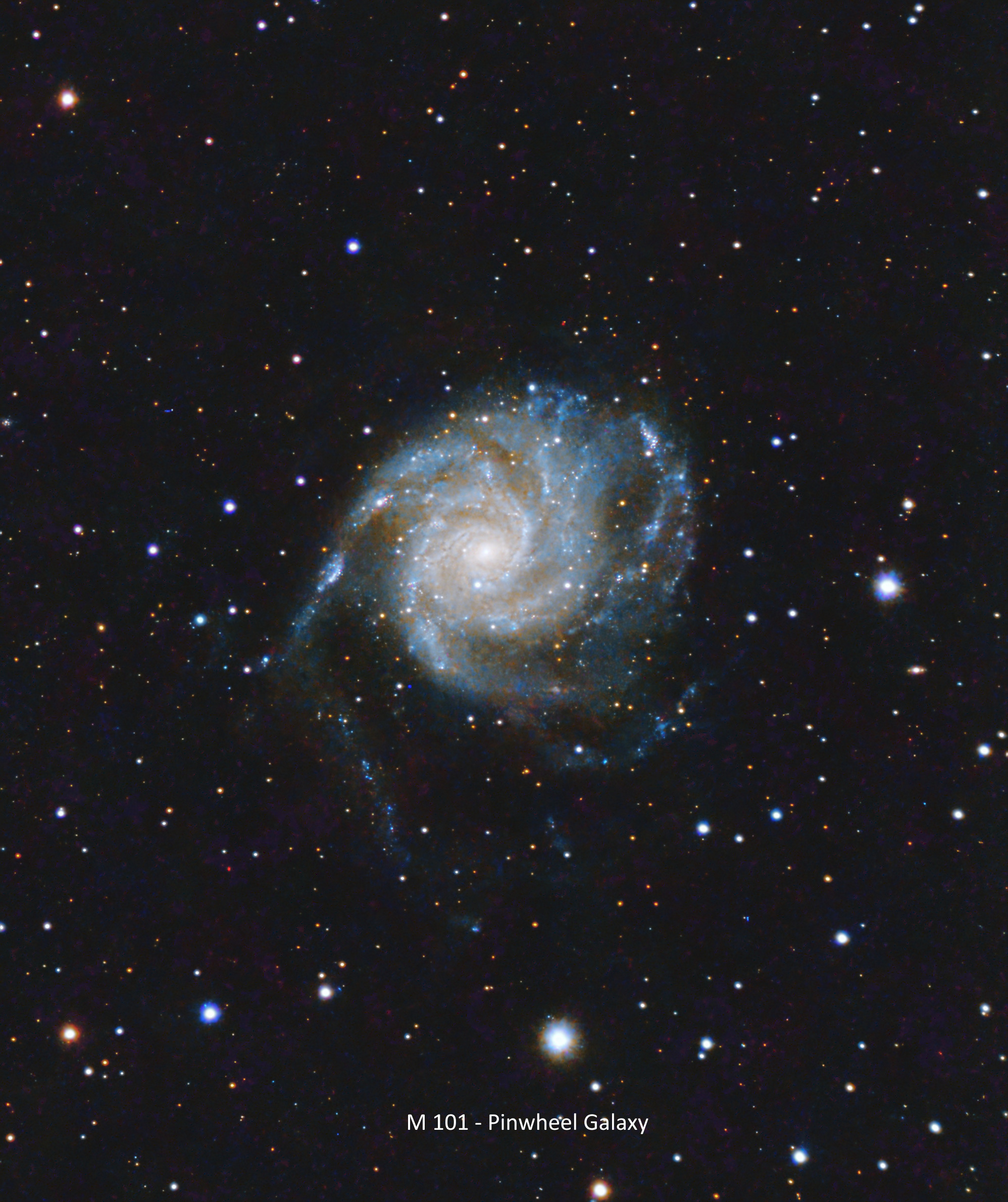
 M101
M101The Pinwheel Galaxy (Messier 101 or NGC 5457) is a large, face-on spiral galaxy located roughly 21 to 25 million light-years away in the northern constellation Ursa Major. Discovered in 1781, it spans about 170,000 light-years across—nearly twice the size of our Milky Way.
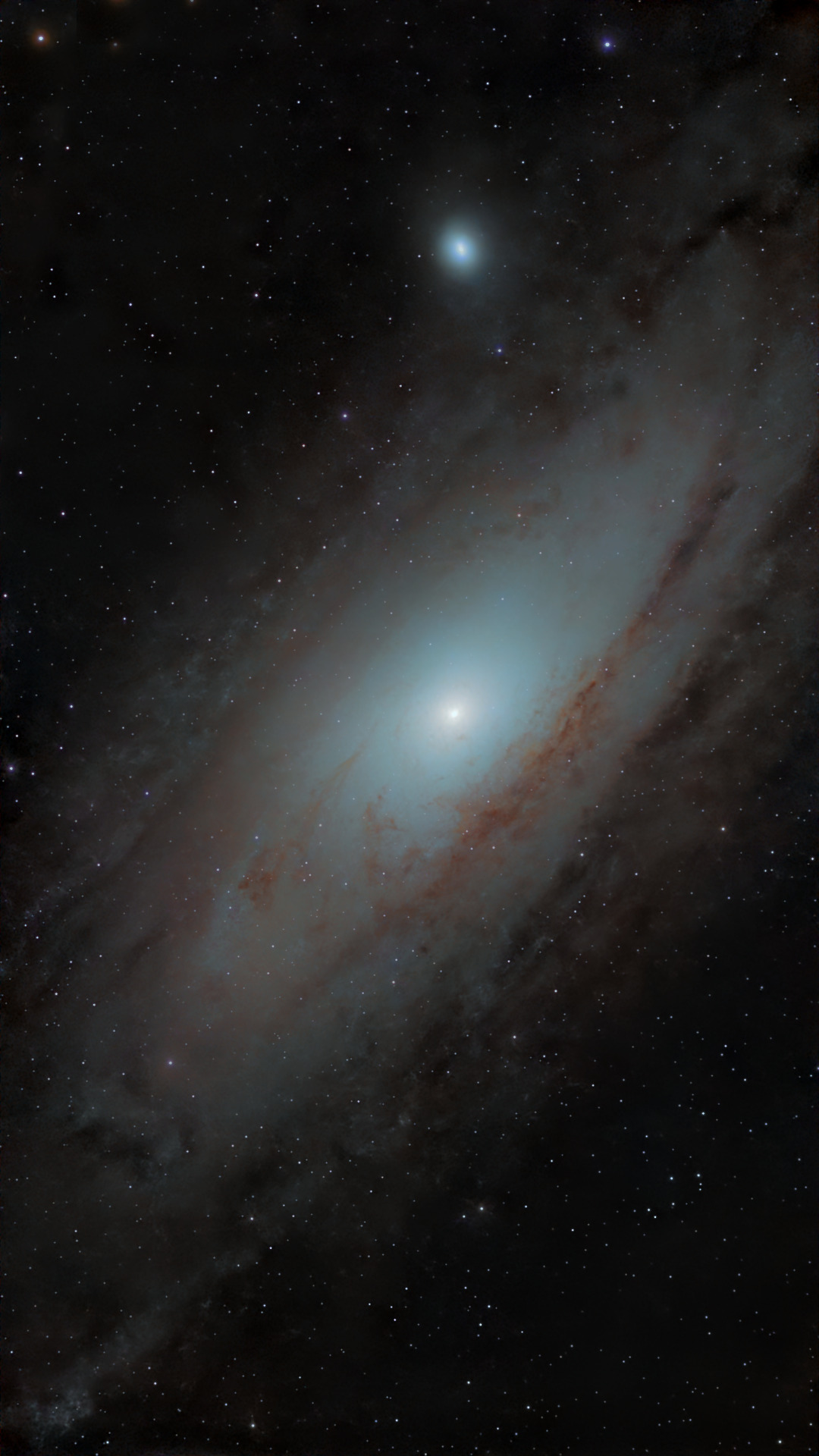 M31
M31The Andromeda Galaxy is the nearest major spiral galaxy to the Milky Way, located about 2.5 million light-years away. In about 4 to 5 billion years it is likely to collide with the milky way.
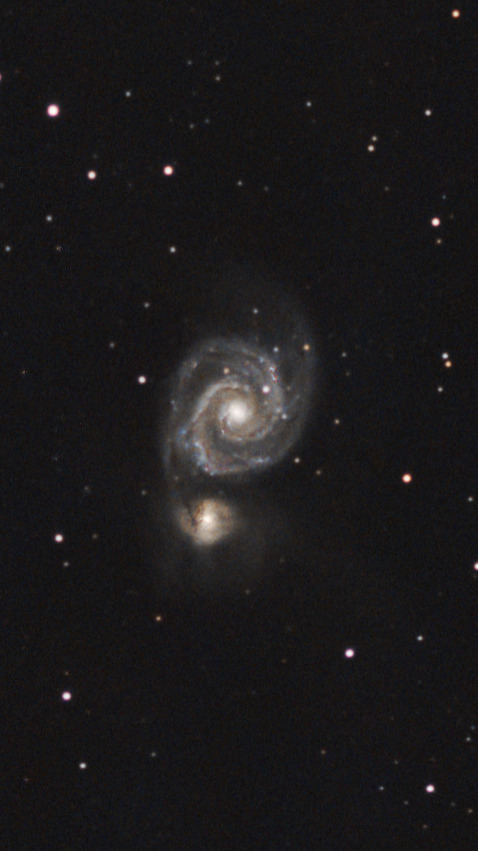 M51
M51Messier 51, widely known as the Whirlpool Galaxy, is a classic grand-design spiral galaxy located roughly 25 to 31 million light-years away in the constellation Canes Venatici. Famous for its clear face-on spiral structure and gravitational interaction with companion galaxy NGC 5195
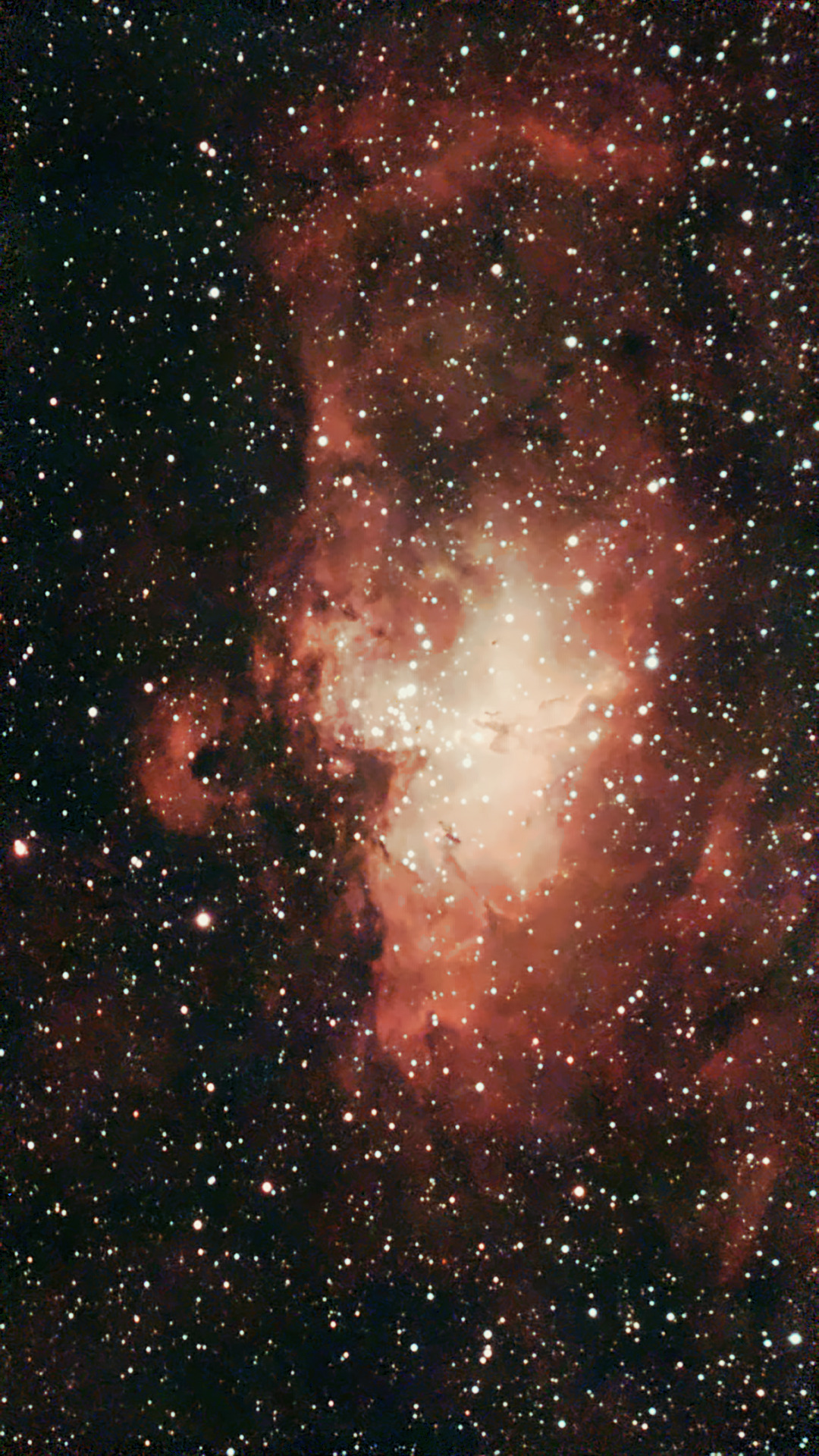 M16
M16Messier 16 is an emission nebula and young open star cluster known as the Eagle Nebula. Situated in the constellation Serpens it is located roughly 5,700 to 7,000 light-years from Earth. Home to the iconic Pillars of Creation, massive columns of cold gas and dust where new stars form. It contains an open star cluster of roughly 8,000 stars surrounded by glowing hydrogen gas and cosmic dust.
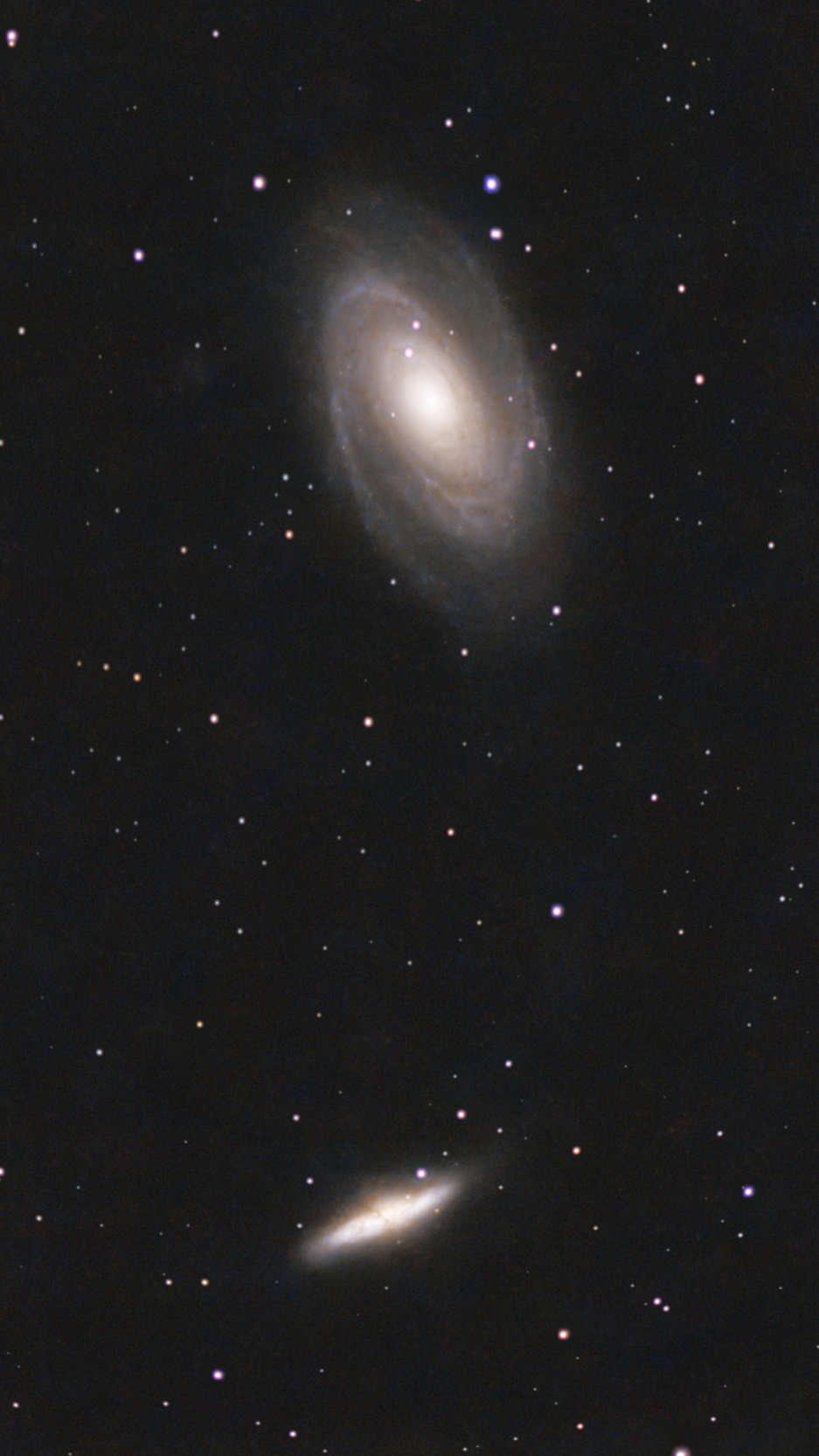 M81
M81Messier 81, also known as Bode's Galaxy or NGC 3031, is a grand-design spiral galaxy located approximately 12 million light-years away in the constellation Ursa Major, featuring a bright yellow core and a supermassive black hole at its center.
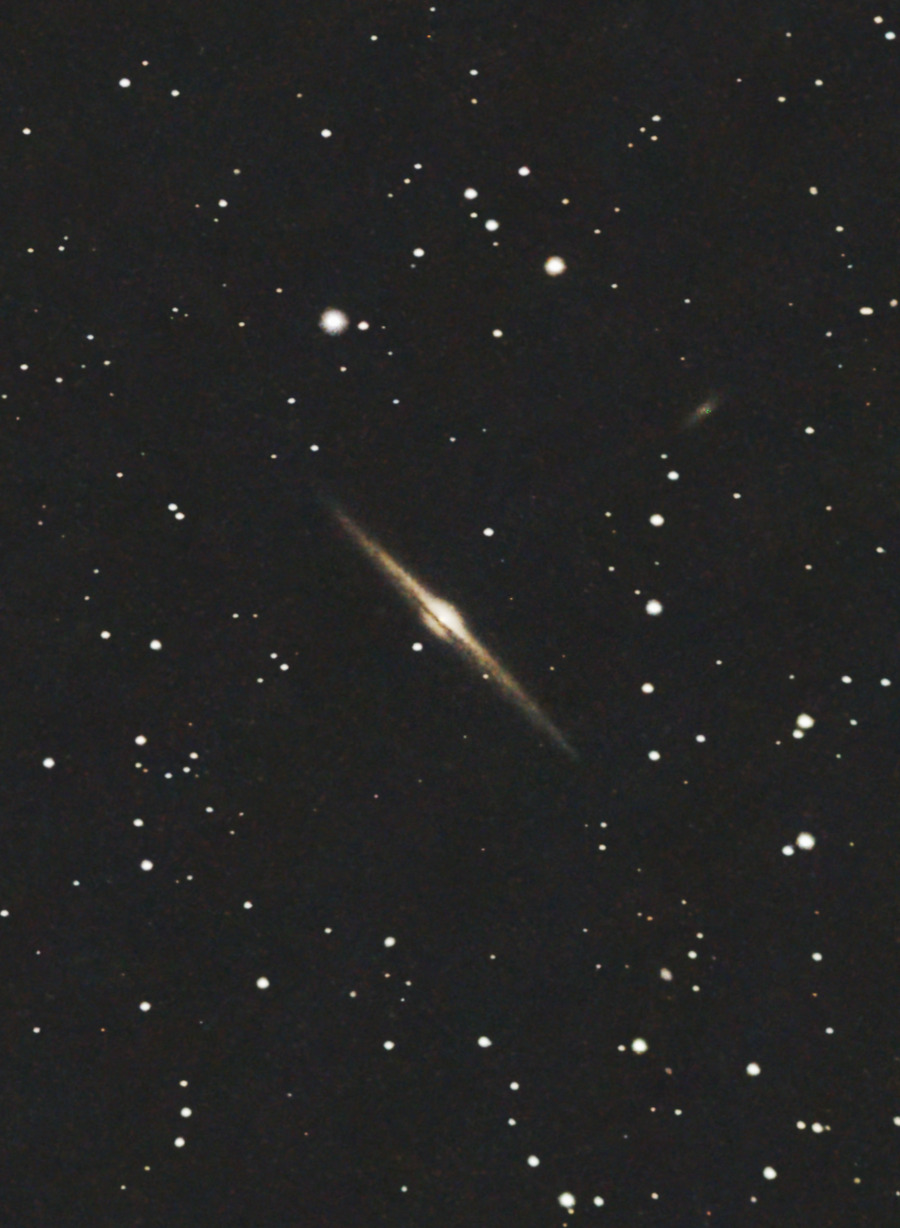 NGC4565a
NGC 4565, also called the Needle Galaxy or Caldwell 38, is a bright edge-on spiral galaxy. It sits about 40 million light-years away in the constellation Coma Berenices. William Herschel found it in 1785. People love it for its thin shape and central dust lane.
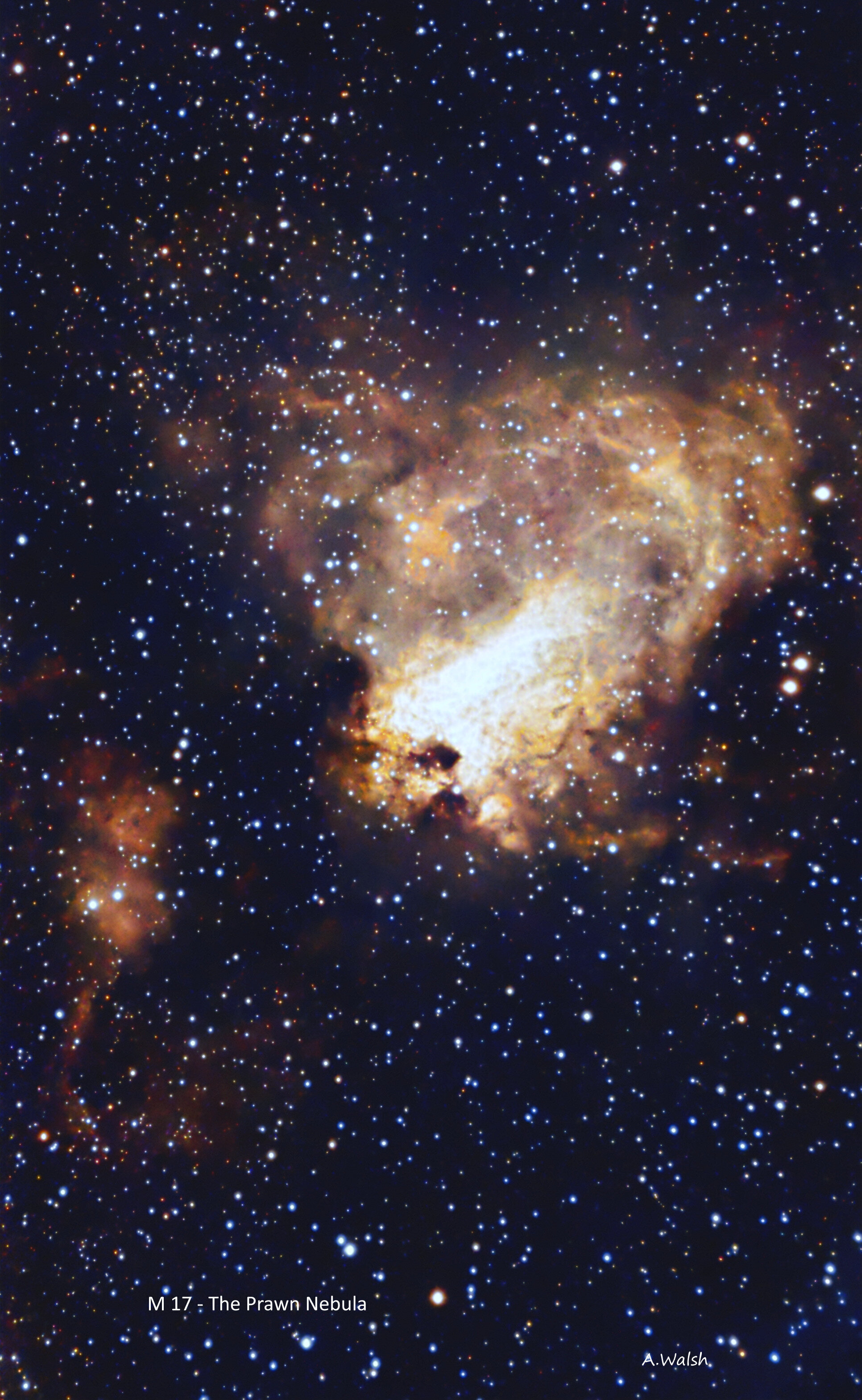 Prawn Nebula
Messier 17 is a bright star-forming emission nebula located about 5,500 light-years away in the constellation Sagittarius. Commonly known as the Omega Nebula, Swan Nebula, or Horseshoe Nebula, it spans roughly 40 light-years and glows from the ultraviolet light of young, hot embedded stars. Also knowb as IC 4628. Located about 6,000 light-years away in the tail of the constellation Scorpius, earning the literal "Prawn" nickname due to its curved, shrimp-like gas filaments.
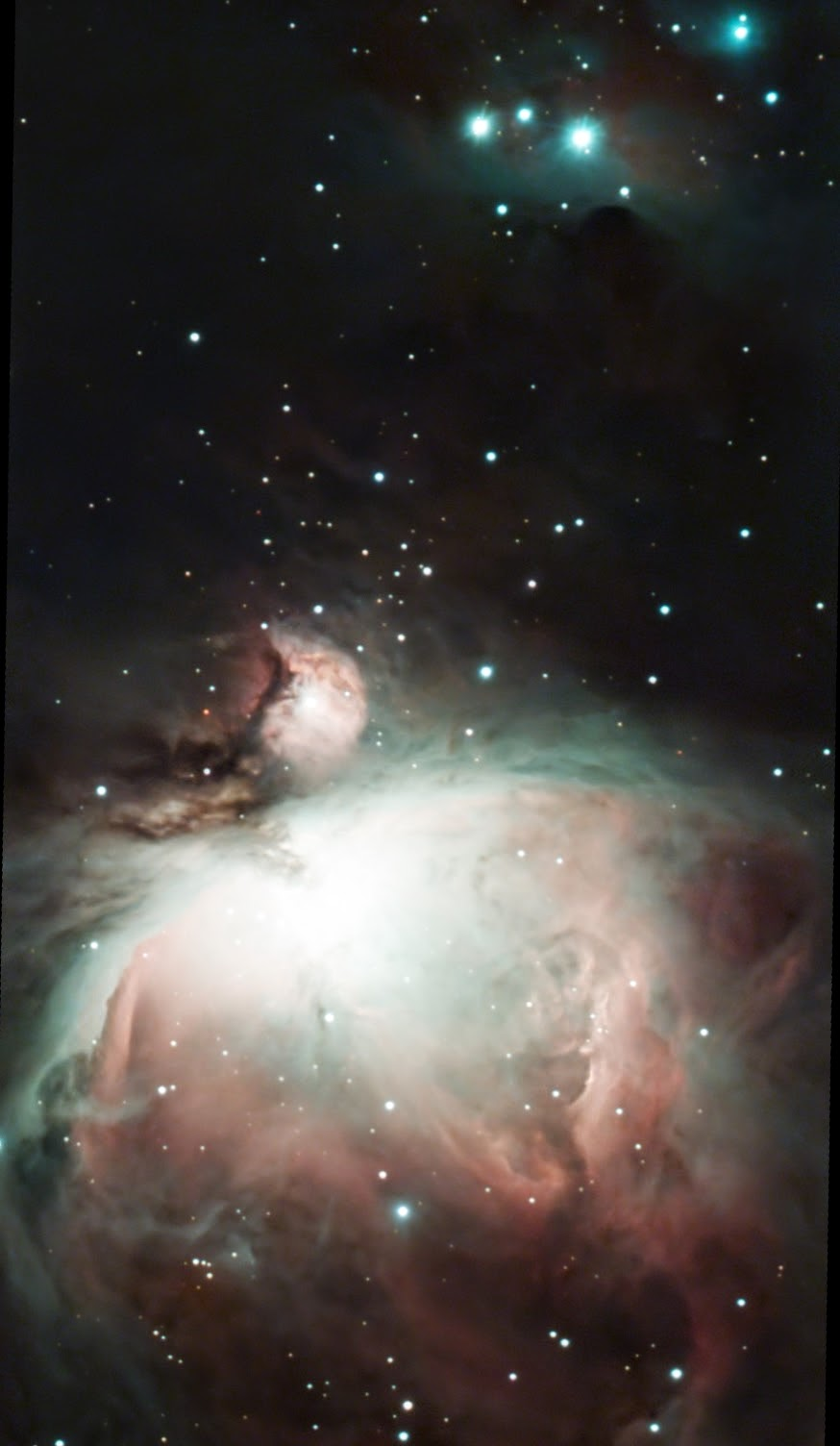 M42
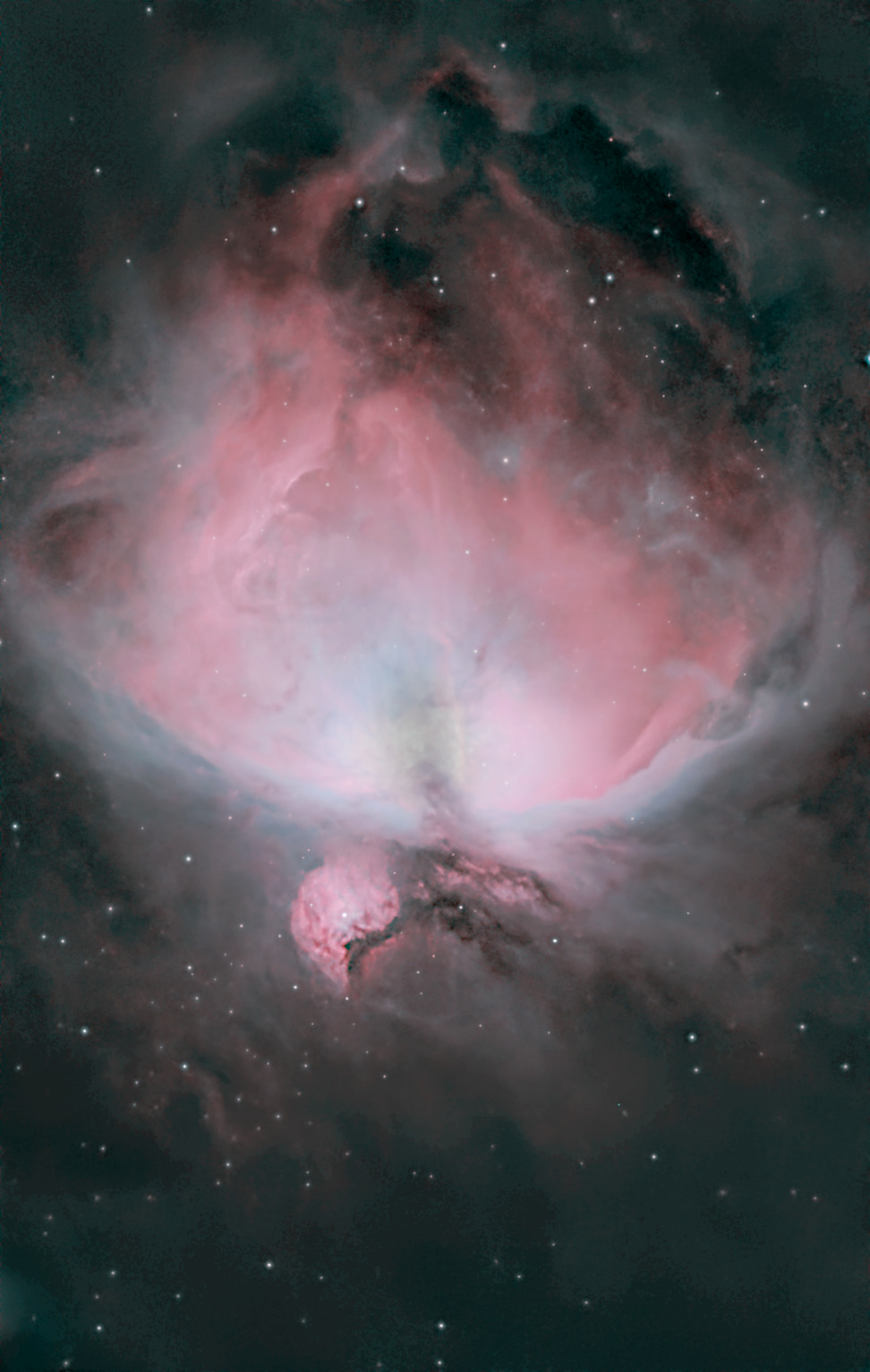
M42The Orion Nebula (also known as Messier 42, M42, or NGC 1976) is a diffuse nebula in the Milky Way situated south of Orion's Belt in the constellation of Orion and is known as the middle "star" in the "sword" of Orion. It is one of the brightest nebulae and is visible to the naked eye in the night sky
 M42
M42M42 is a stunning diffuse stellar nursery situated south of Orion's Belt in the constellation Orion. Approximately 1300 light years from earth making it the the closest massive star forming region. Home to the Trapezium Cluster, a tight group of massive newboun stars illuminating the surrounding gas.
 Swan Nebula
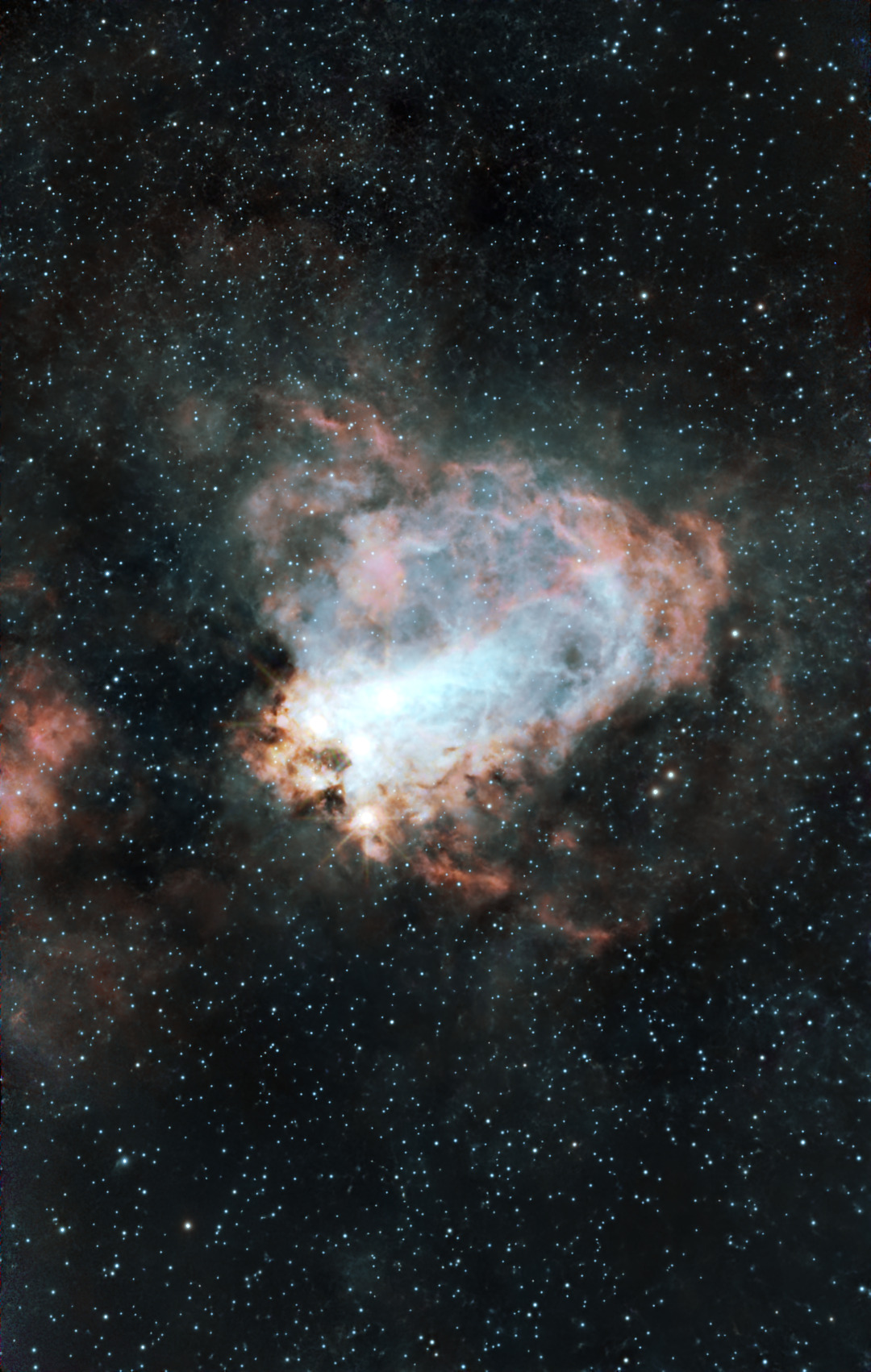
The Swan Nebula (Messier 17) is a massive, active star-forming region located 5,500 light-years from Earth in the constellation Sagittarius. Also called the Omega or Horseshoe Nebula, it spans roughly 40 light-years and resembles a swan swimming on water.
 Veil Nebula
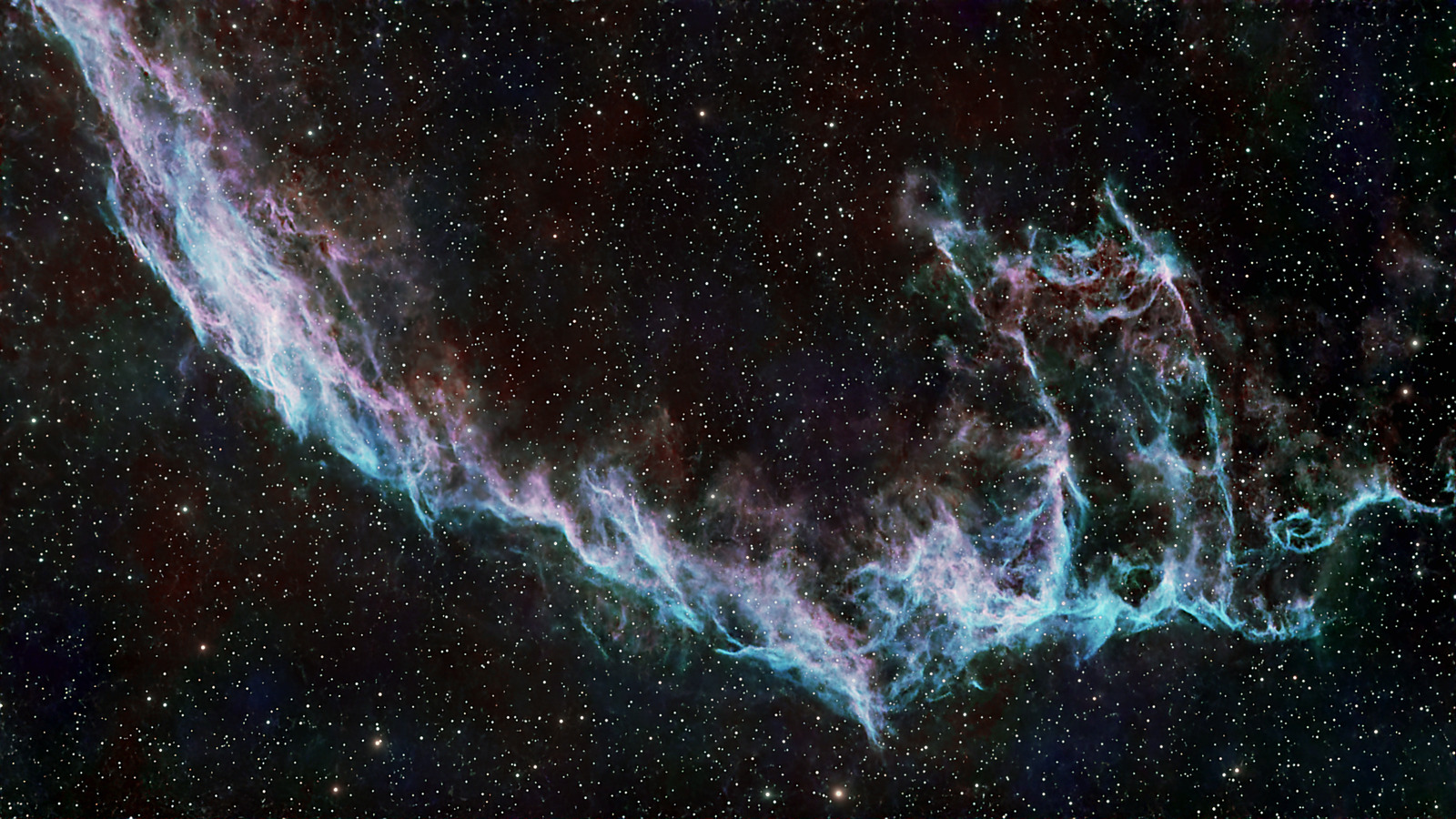
The Veil Nebula is a massive, expanding cloud of heated gas and dust located roughly 1,500 to 2,100 light-years away in the constellation Cygnus. It is the visible portion of the Cygnus Loop, created by the cataclysmic death of a star 20x more massive than our Sun that exploded 5-8,000 years ago
 Tarantula Nebula
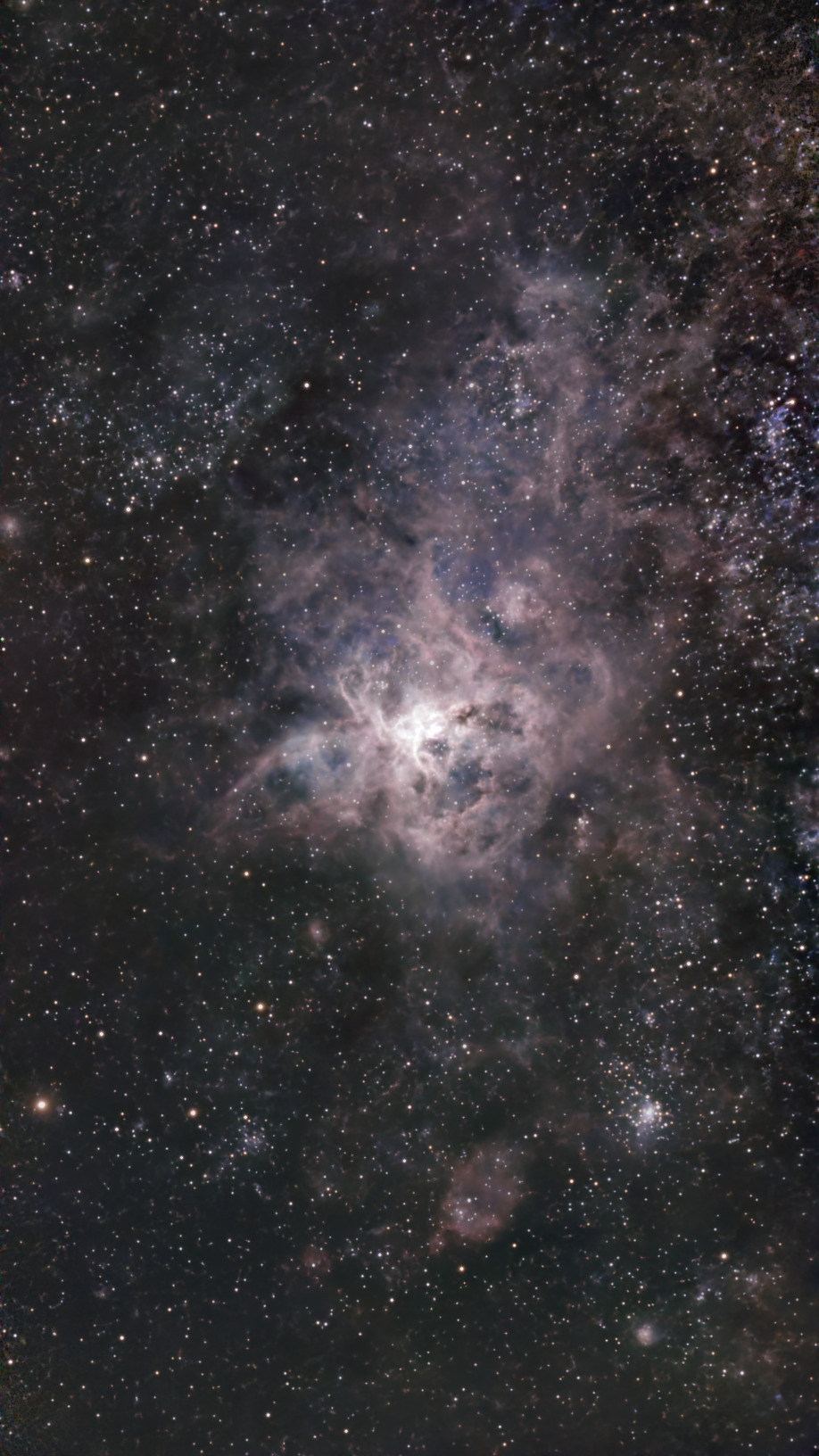
The Tarantula Nebula (30 Doradus) is the largest and brightest star-forming region in our cosmic neighborhood, located about 160,000 light-years away in the Large Magellanic Cloud. Named for its spider-like gas legs, it houses R136a1, the most massive star ever found.
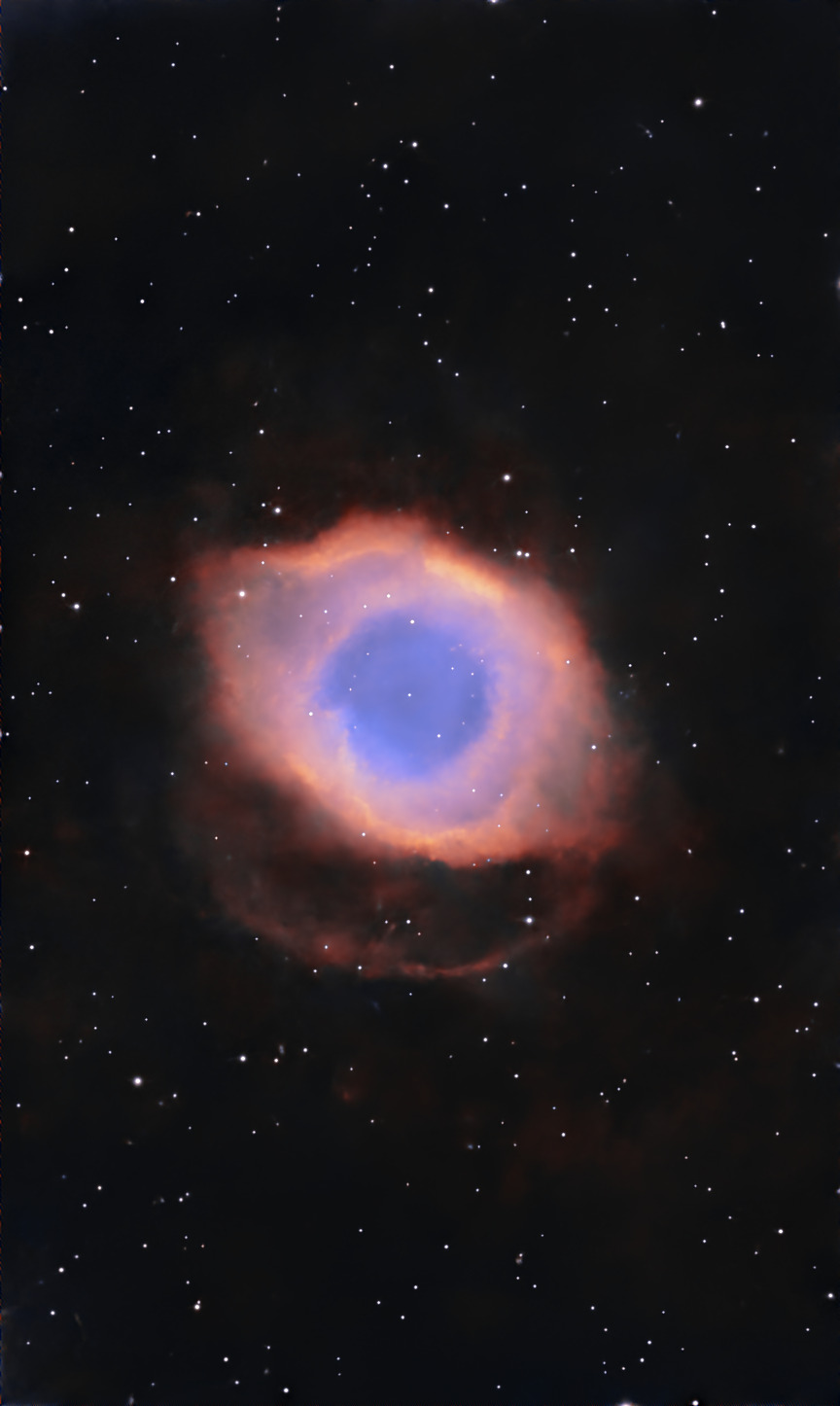 Helix Nebula
The Helix Nebula, a planetary nebula - the remnant central stellar core is destined to become a white dwarf star. The observed glow of the central star is so energetic that it causes the previously expelled gases to brightly fluoresce. It lies about 650ly, spanning about 2.5ly. Its age is estimated to be 10600 years.
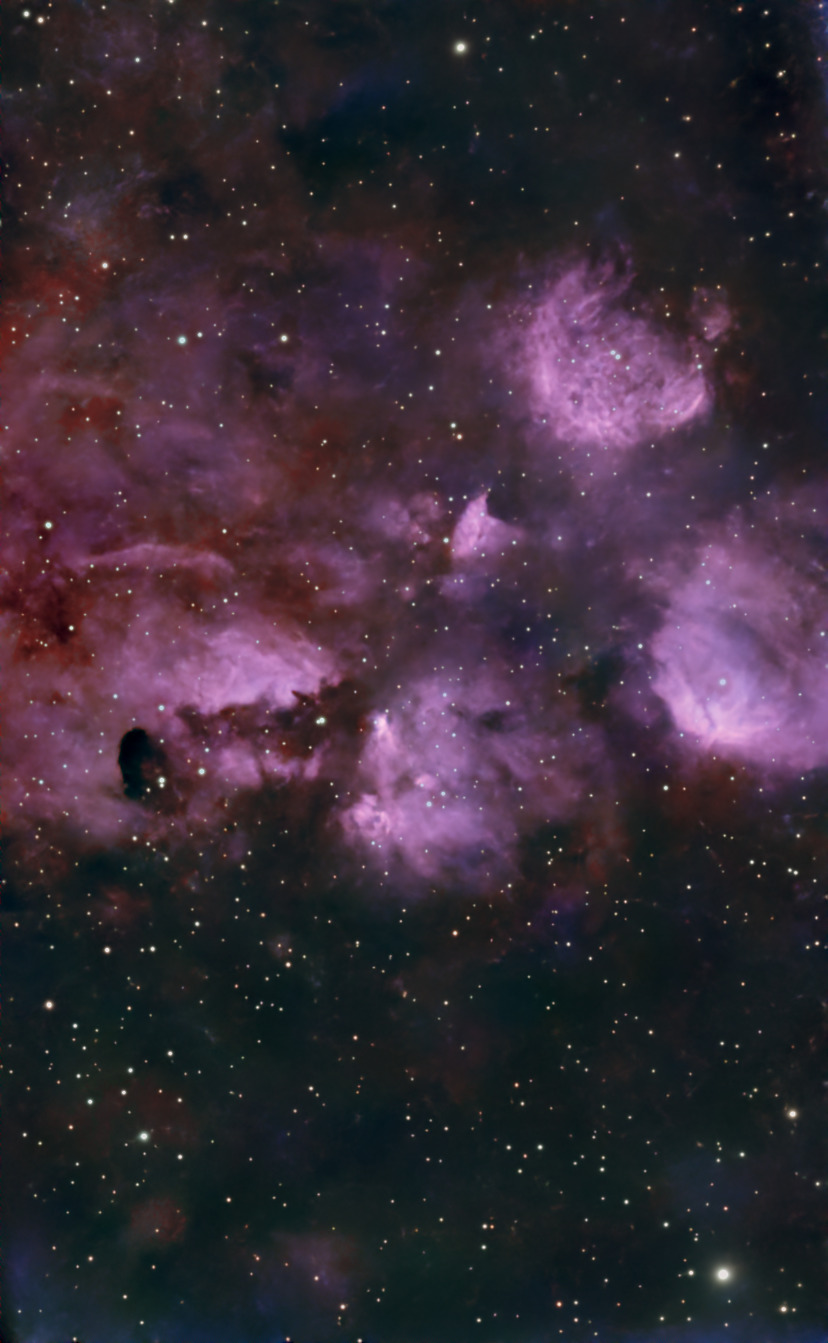 NGC6334 - Cats Paw Nebula
NGC 6334, famously called the Cat's Paw Nebula or Bear Claw Nebula, is a massive emission nebula and active star nursery. Located in the constellation Scorpius at about 5,500 light-years from Earth, it spans roughly 50 to 80 light-years across and glows a distinct red from ionized hydrogen.
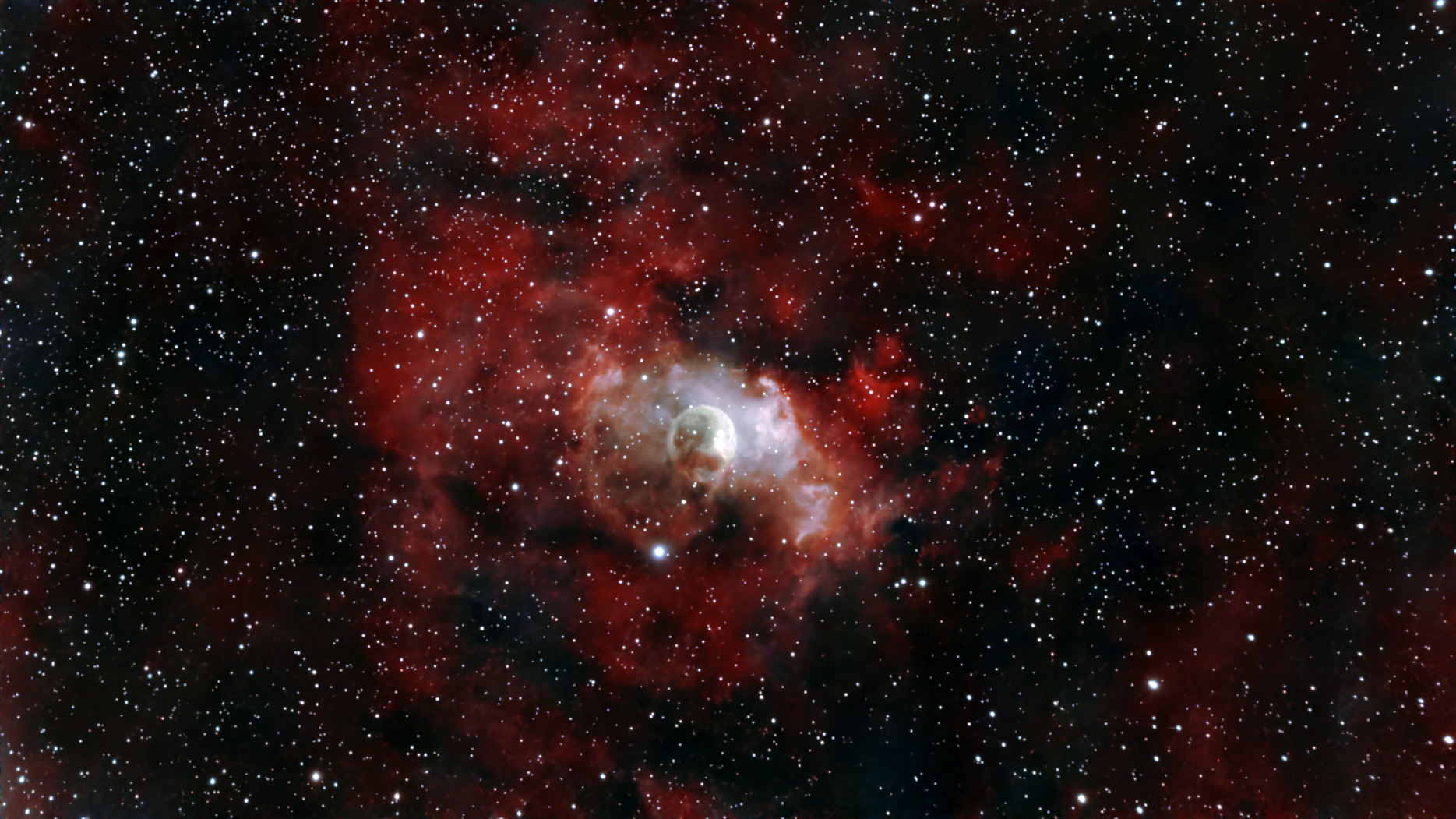 The Bubble nebula
The Bubble nebula, also known as NGC7625 is a striking emission nebula located about 7100 light years from earth in the constellation of Cassiopeia.
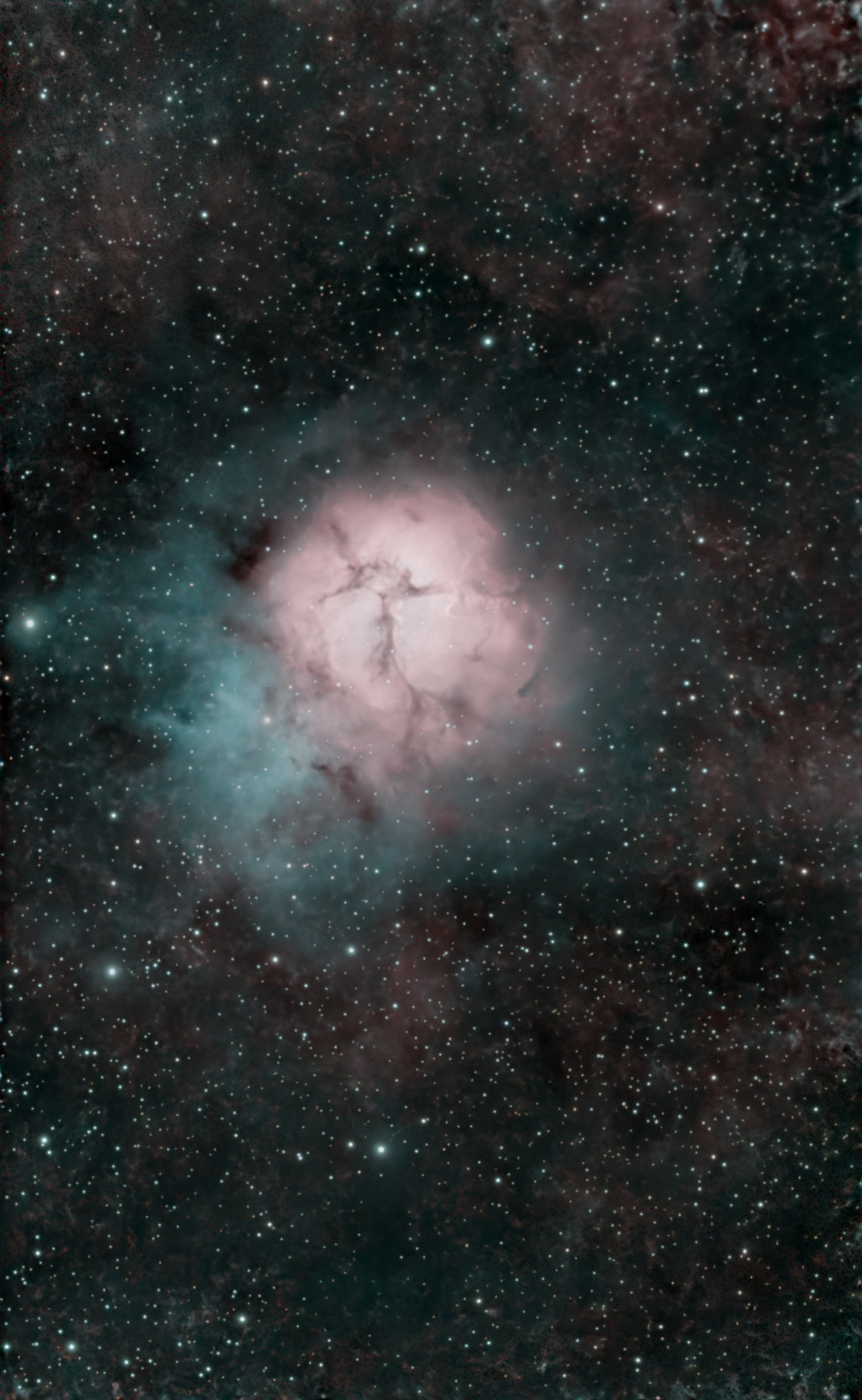 The Cocoon Nebula
The Cocoon Nebula (cataloged as IC 5146) is a stunning combination of an emission nebula, a reflection nebula, and a dark nebula located roughly 2,500 to 4,000 light-years away in the constellation Cygnus.
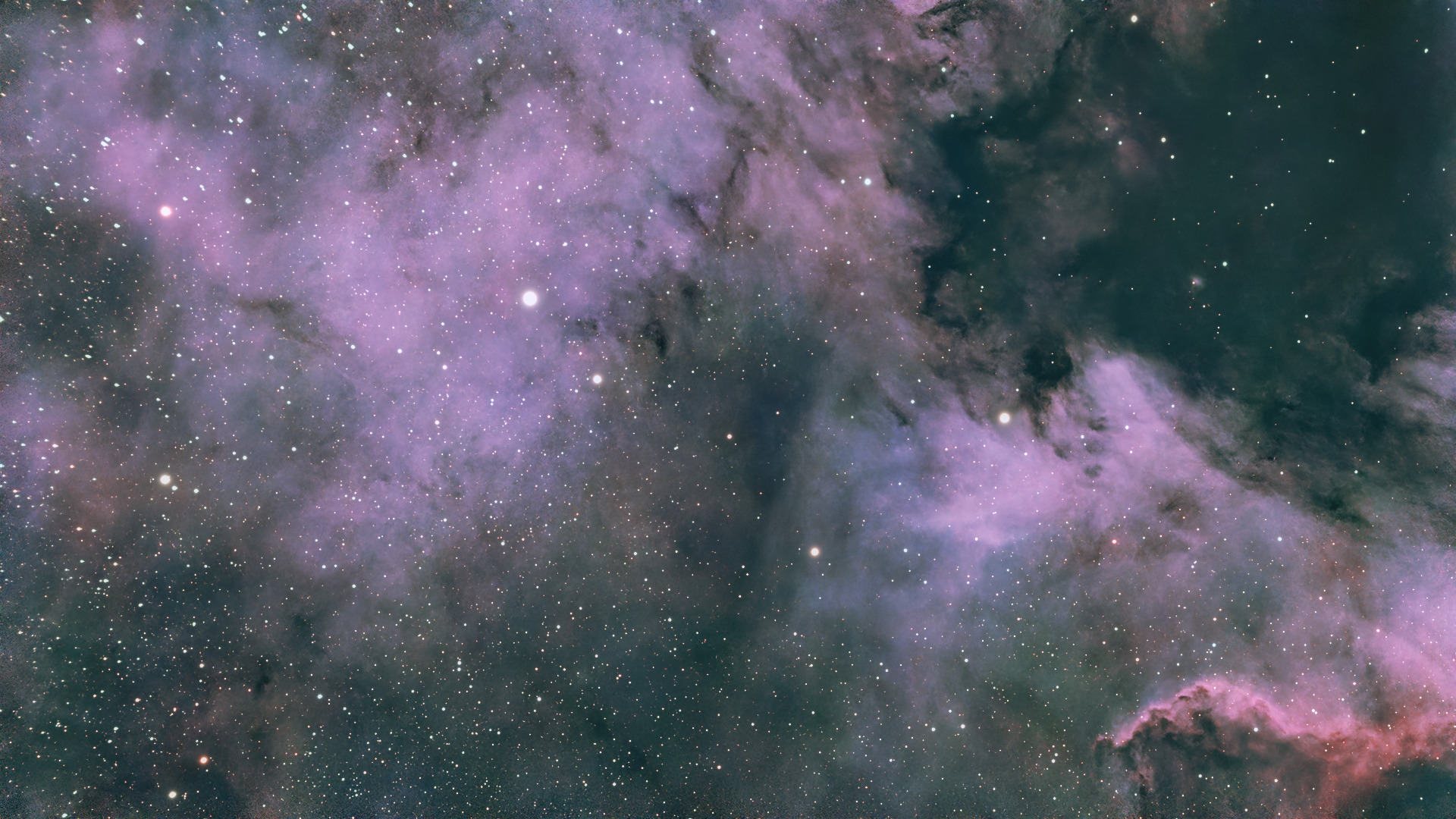 The North American Nebula
Key Facts
Location: It sits in the constellation Cygnus (the Swan), right next to a bright star named Deneb.
Distance: It is about 1,700 light-years away from Earth.
Size: It measures about 100 light-years across. It covers a large space in the sky, about ten times the size of a full moon.
What It Is Made of
Emission Nebula: This means it is a cloud of hot gas (mostly hydrogen) that glows with its own light. Young, hot stars inside the cloud shine energy onto the gas and make it light up.
Dark Dust: Thick lanes of dust block the light in certain spots. One famous dark area looks like the Gulf of Mexico.